Quick answer
Understand Pico wine through its grapes, styles, basalt-walled vineyards and five connected production stages, with official sources.
Pico in the glass: grapes, styles and volcanic character
Pico wine is not one flavour. Its most distinctive bottles share a bright Atlantic line—fresh acidity, saline lift and volcanic tension—then change with grape, harvest date, skin contact, fermentation and ageing.
The five grapes of DOP Pico
For DOP Pico, at least 85% of a blend must come from Arinto dos Açores, Verdelho and Terrantez do Pico. Galego Dourado and Malvasia Fina may together form no more than 15%. These sommelier-style profiles describe typical directions, not a promise for every bottle.
Principal DOP grape
Arinto dos Açores
Taut and luminous: lemon peel, green apple and a sea-spray edge, often with a stony, almost smoky finish. Its firm acidity gives Pico whites length and precision.
Try with: lapas, grilled fish, fresh cheese or simply the Atlantic view
Principal DOP grape
Verdelho
More generous in shape, with ripe citrus, orchard fruit, gentle herbs and occasional floral or honeyed tones. It can feel broad without losing Pico’s salty freshness.
Try with: octopus, richer fish, roast poultry or island cheeses
Principal DOP grape
Terrantez do Pico
Rare, fine-boned and aromatic: citrus zest, white flowers, tea leaf and mineral spice. The palate is usually energetic, savoury and persistent.
Try with: shellfish, ceviche, delicate smoked fish or a slow tasting on its own
Supporting DOP grape · maximum 15%
Galego Dourado
A discreet blending voice that can bring soft stone-fruit and floral nuances, rounding a wine while the Atlantic acidity remains in focus.
Try with: light starters, fresh fish and mild cheeses
Supporting DOP grape · maximum 15%
Malvasia Fina · Boal
Gently perfumed, suggesting blossom, ripe pear and a touch of honey or spice. In a blend it can add aromatic breadth and a softer middle palate.
Try with: grilled squid, baked fish, soft cheese or lightly spiced food
Every recognised wine style
DOP Pico is exclusively white and recognises still, sparkling, fortified and overripe-grape wines. The broader IGP Açores also permits white, red and rosé expressions, including sparkling and fortified wines.
DOP Pico or IGP Açores
Still white
Pale and incisive, often citrus-led with iodine-like notes, evident salinity, mineral drive and a cool, clean finish.
DOP Pico or IGP Açores
Traditional-method sparkling
Fine bubbles sharpen Pico’s natural acidity; expect citrus, Atlantic savouriness and, with lees ageing, a subtle bread-dough complexity.
DOP Pico or IGP Açores
Fortified wine
Amber to tawny, full and structured: ripe fruit, nuts, honey, caramel, spice and smoke can unfold while acidity and salinity keep the finish alive.
DOP Pico
Overripe-grape wine
Rich yet lifted, ranging from dry to medium-sweet, with stone fruit, dried fruit, honey, caramel and spice carried by bright acidity.
IGP Açores
Atlantic red
Fruit-forward and fresh rather than heavy, often with a light smoky accent, savoury energy and balanced tannin.
IGP Açores
Saline rosé
Salmon to pink, crisp and fruit-led, with marked acidity, mineral freshness and a salty line that invites another sip.
Taste before relying on a profile: producer, vintage, site and winemaking can move a bottle in a very different direction. DOP and IGP on the label identify regulated origin; they are not scores or guarantees of personal preference.
How Pico wine is made: five connected stages
Pico wine begins in small plots protected by dry-stone basalt walls, where vines are tended and grapes are normally harvested by hand. Crushing, pressing, fermentation, maturation and bottling then depend on the wine being made. This sequence explains the shared logic of production without presenting one cellar’s method as a universal recipe.
Five singular pencil-and-watercolour illustrations following Pico grapes from basalt-walled vineyard to finished bottle
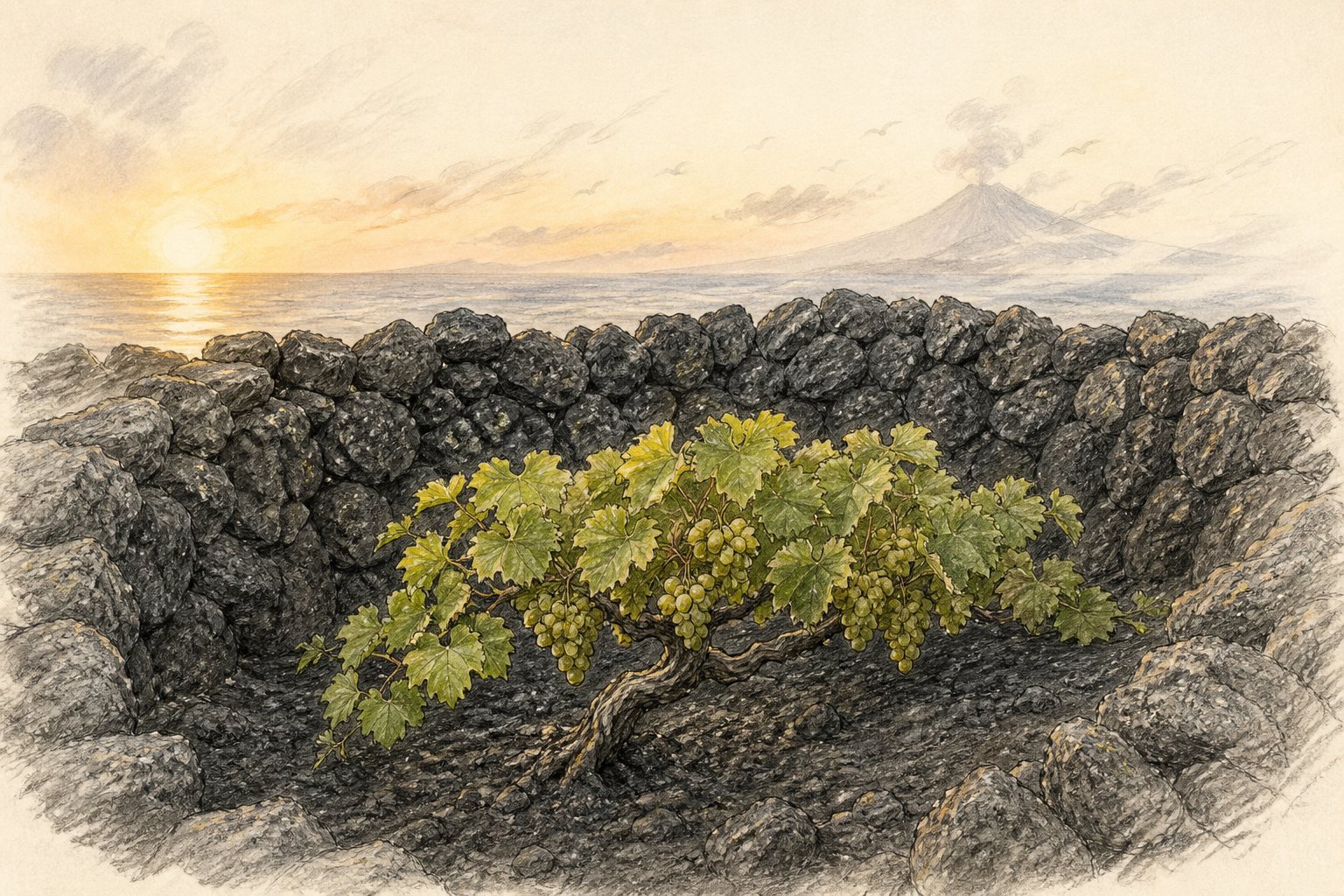
1. Tend vines inside the currais
The basalt walls shelter low vines from wind and salt spray and create Pico’s distinctive vineyard pattern.
© Atlantic Heritage Unipessoal Lda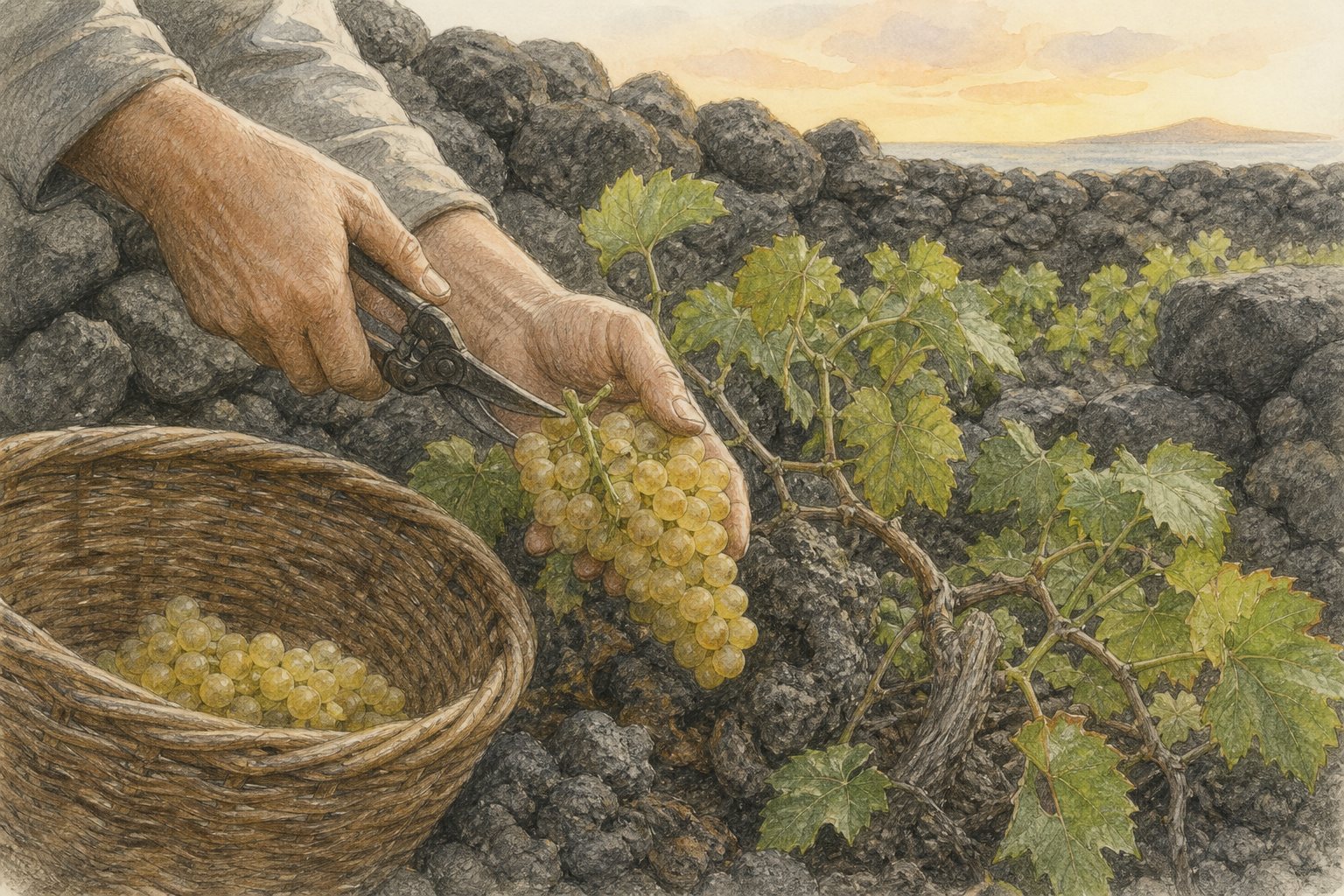
2. Harvest the grapes
Grapes are selected and picked by hand when their balance suits the intended wine.
© Atlantic Heritage Unipessoal Lda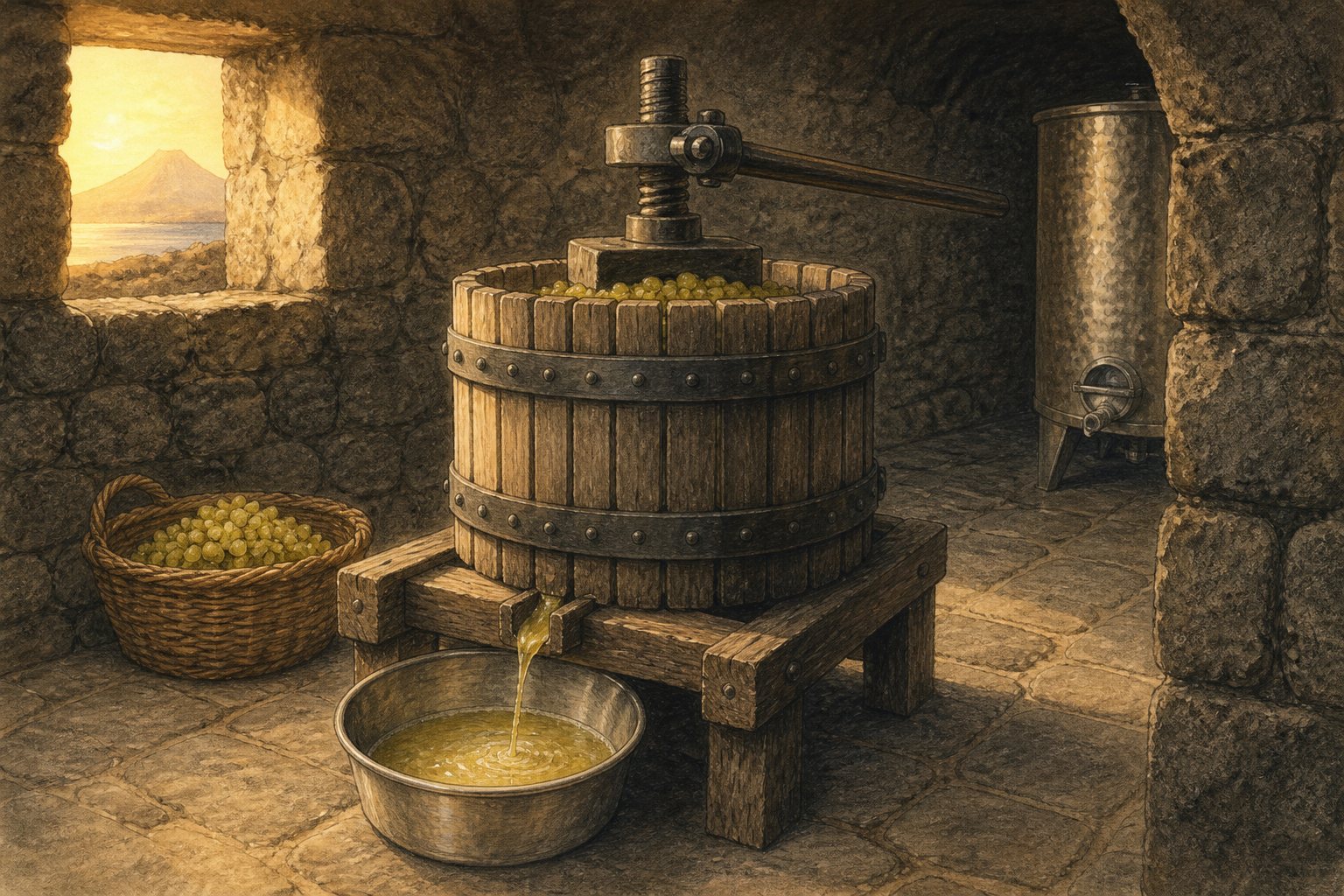
3. Crush and press
The fruit is processed promptly; pressing choices depend on grape variety and wine style.
© Atlantic Heritage Unipessoal Lda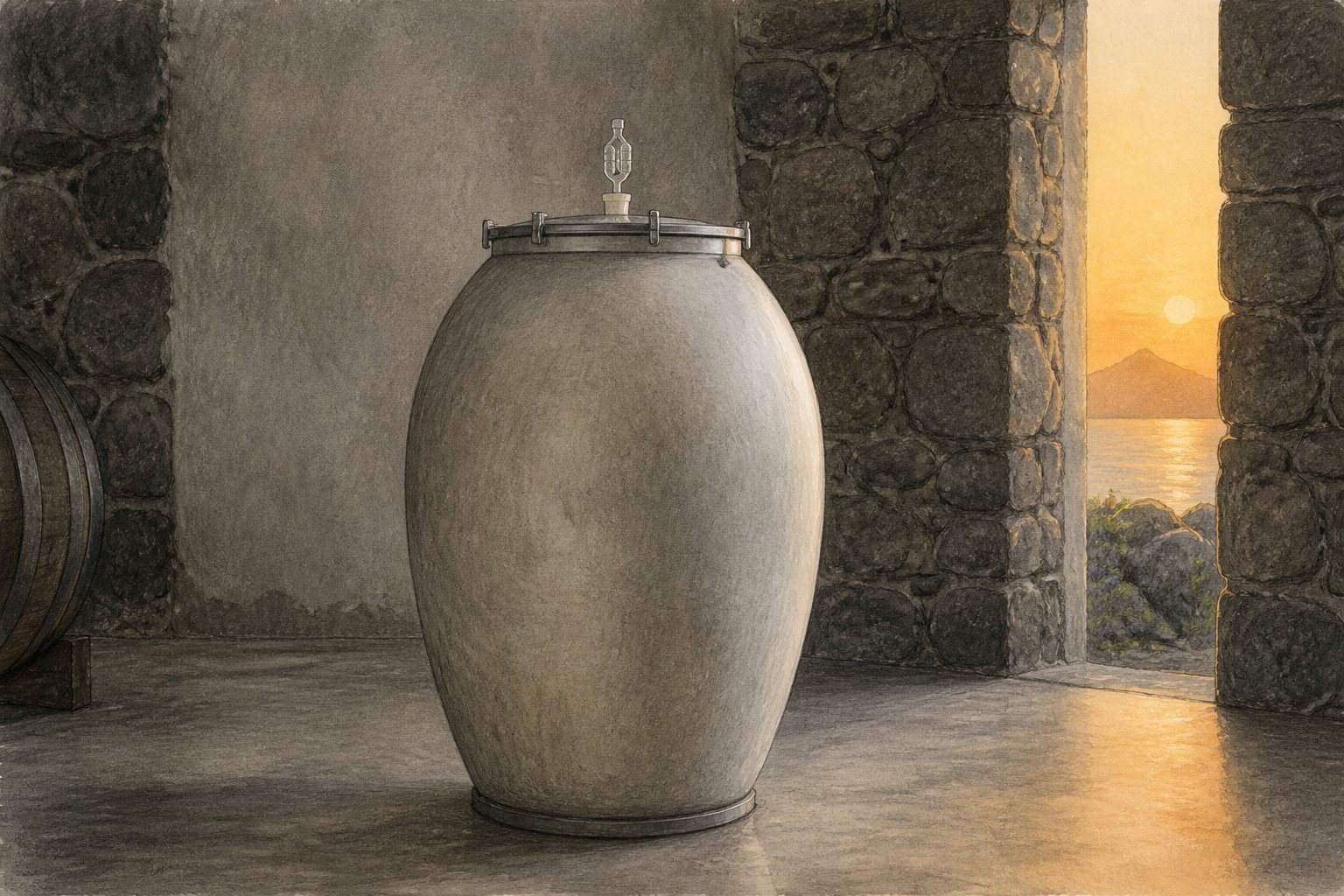
4. Ferment and guide the wine
Yeasts turn grape sugars into alcohol while the producer controls time, temperature and contact with solids.
© Atlantic Heritage Unipessoal Lda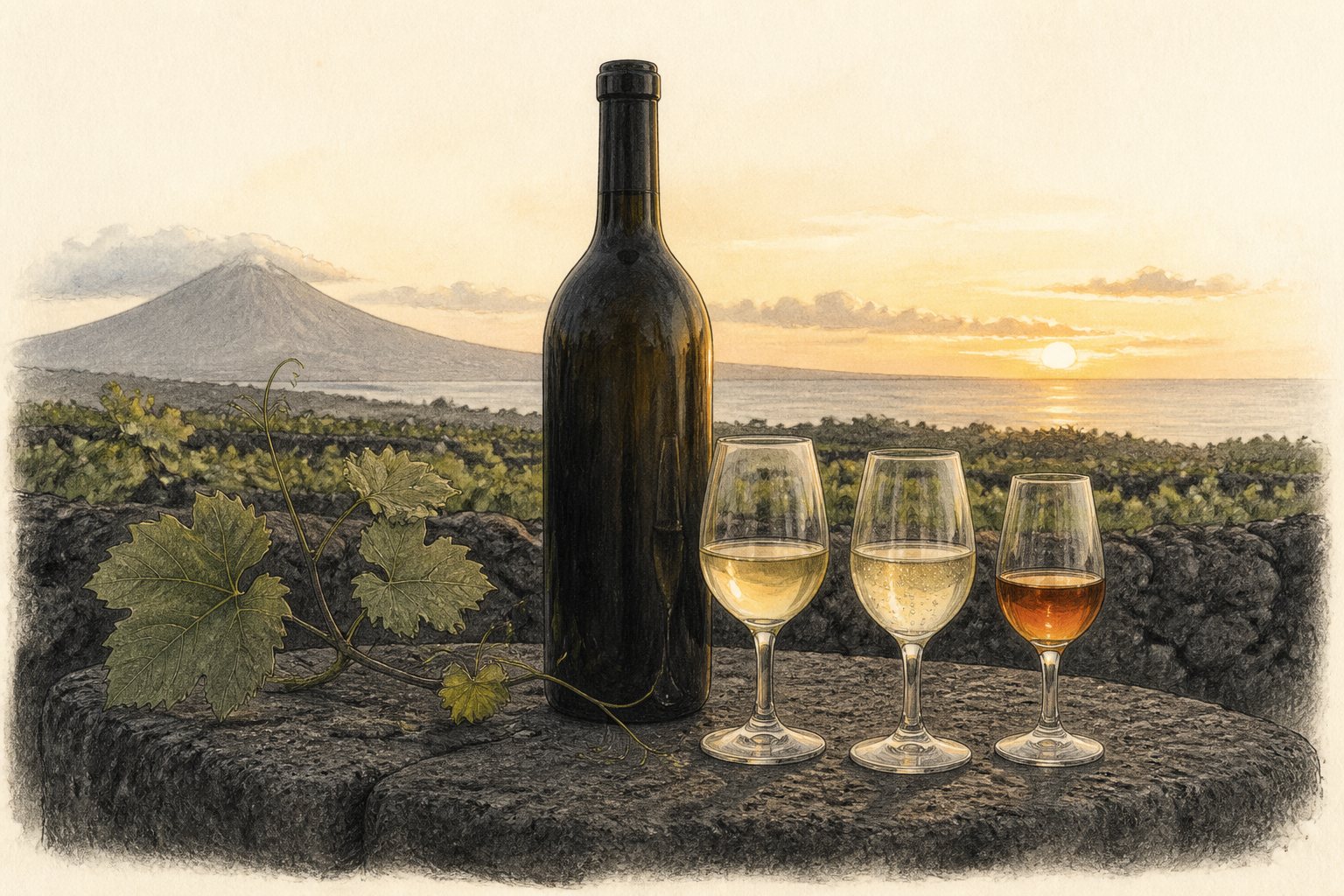
5. Mature and bottle
The wine may rest in tank, barrel or bottle before release, according to the producer’s chosen style.
© Atlantic Heritage Unipessoal Lda
Basalt walls shape the vineyard landscape; decisions in the cellar shape the wine. Methods vary by grape, producer and style.
Sources and verification
Official and primary sources used for this article. Links checked 4 September 2026.