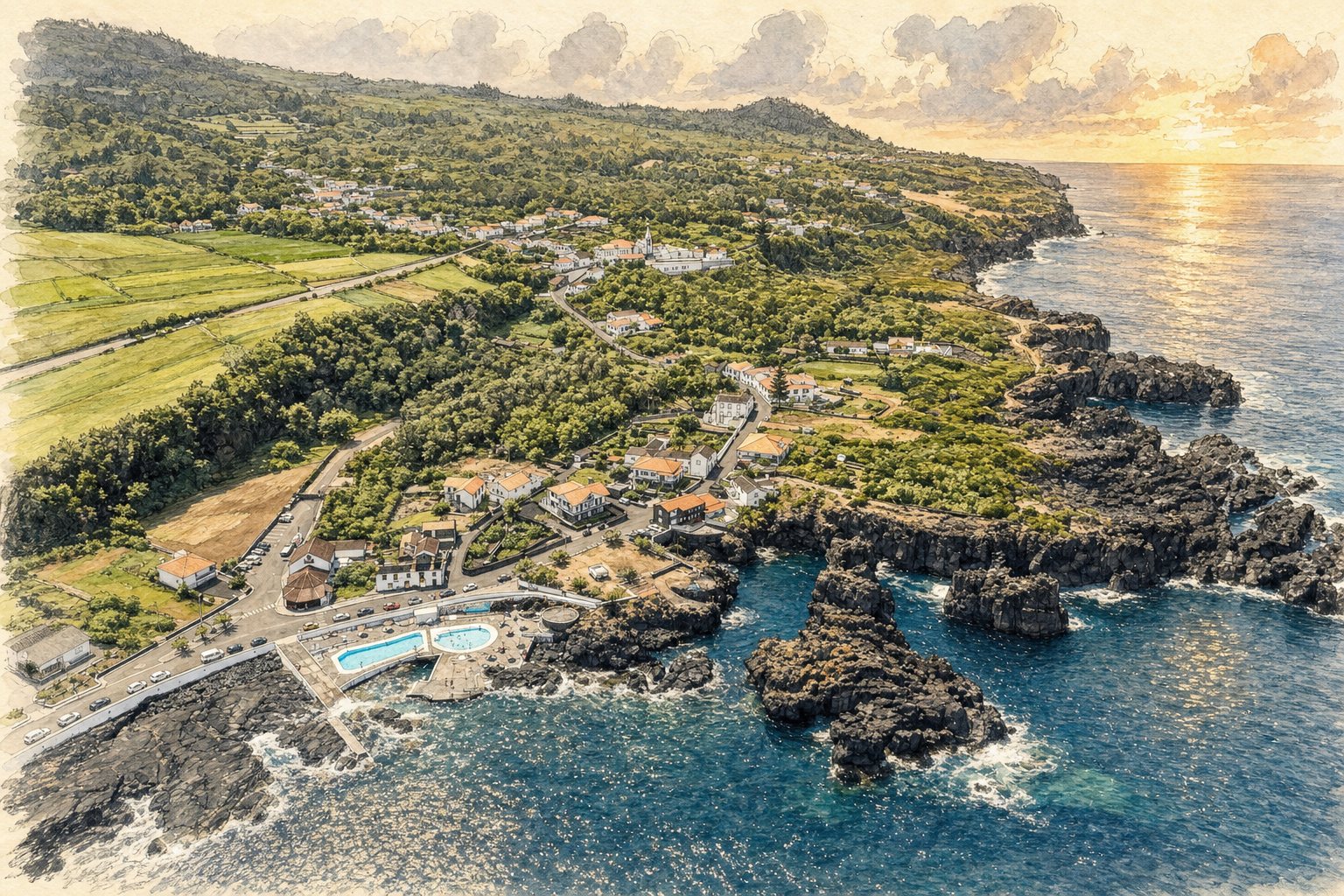
Volcano and lava
Climb Mount Pico with suitable preparation, visit Portugal's longest lava tube at Gruta das Torres, or explore lava fields and coastal natural pools.
Local planning guide · Reviewed 29 August 2026
A clear starting point for planning days on Pico, visiting Faial or São Jorge, understanding the vineyard landscape and preparing for Atlantic weather.
Written and reviewed by Marcos Gonçalves, owner and manager of Atlantic Heritage Luxury Villa, drawing on first-hand local hosting experience and the official sources listed below.
At a glance
Start with the UNESCO vineyard landscape around Criação Velha and Madalena, allow a separate weather-safe day for Mount Pico, visit Gruta das Torres, and explore the island's natural swimming areas, lakes and whaling heritage. Whale watching, diving, hiking, cycling, wine tasting, stargazing and a ferry day to Faial are among the most rewarding options.
Opening times, sea conditions and mountain access can change. Reserve limited-capacity experiences in advance and confirm conditions with the official operator on the day.
Climb Mount Pico with suitable preparation, visit Portugal's longest lava tube at Gruta das Torres, or explore lava fields and coastal natural pools.
Choose responsible whale watching, diving, sailing, kayaking, fishing or a relaxed ferry crossing across the central-group channel.
Walk through basalt-walled vineyards, taste Pico wines, visit the Wine Museum and discover the island's whaling history and local food.
UNESCO
The Landscape of the Pico Island Vineyard Culture has been on UNESCO's World Heritage List since 2004. Its 987-hectare protected area and 1,924-hectare buffer preserve a network of small plots called currais. Generations of growers built their dry-stone basalt walls to protect vines from Atlantic wind and salt spray.
Criação Velha remains part of this living landscape. Please use marked routes, respect working vineyards and never move stones from the walls.
Pico wine
The three emblematic local white varieties are Arinto dos Açores, Verdelho and Terrantez do Pico. The volcanic soils and maritime setting are commonly associated with fresh acidity, saline character and mineral tension.
Pico DOP covers still wine, sparkling wine, liqueur wine and wine from overripe grapes. Producers also make white, rosé and red wines under the wider Azores indication, so the best tasting is one that compares several producers and styles rather than looking for a single “typical” bottle.
The Triangle
Pico, Faial and São Jorge form the Central Group's “Triangle”. Pico makes a strong base: Madalena faces Horta across a narrow channel, while seasonal connections extend to Velas on São Jorge. Faial works particularly well as a day trip for Horta, the marina, museums and the Capelinhos volcanic landscape. São Jorge normally deserves a longer day or an overnight stay for its cliffs, fajãs and walking routes.
Ferry times vary by date, season and weather. Always consult Atlânticoline's live timetable before planning a connection and allow flexibility around flights.
Atlantic climate
The Azores have a mild maritime climate throughout the year, but sun, cloud, wind and showers can occur on the same day and conditions vary around the island. Official tourism information gives average air temperatures of roughly 13.6°C in the coolest period and around 22°C in the warmest, with warmer daytime peaks in summer. Sea temperatures are generally around 16°C in winter and above 20°C in summer.
June to September usually brings longer dry intervals and warmer water. Spring is excellent for wildlife and flowers; autumn remains mild; winter is quieter and greener. Pack light waterproof layers in every season and keep mountain, ferry and ocean plans flexible.
Mount Pico
Mount Pico reaches 2,351 metres above sea level, the highest point in Portugal. The Azores Geopark states that the volcano rises about 3,500 metres above the surrounding ocean floor and describes it as the third-largest volcano in the North Atlantic.
Adding the visible height and the submarine foundation is useful for understanding its scale, but it is not the same as an internationally standardised “world's highest mountain” ranking. The accurate claim is that Pico is an exceptionally large oceanic volcano, rising several kilometres from the seabed.
Practical planning
Four to five nights allow a first visit with weather flexibility; a week makes it easier to include the mountain, wine, whale watching, different coasts and a neighbouring island. A hire car is normally the most practical way to explore Pico. Book the mountain, Gruta das Torres, popular restaurants and specialist activities ahead, especially in summer.
Atlantic Heritage is approximately five minutes by car from Madalena and places guests close to the Criação Velha vineyard landscape. The villa team can help with practical recommendations while leaving bookings and final safety decisions with the licensed operator.
Official planning sources
Your stay
Return to a heated infinity pool, indoor jacuzzi, personalised breakfast and daily service after exploring the island.